Could it be there is a way to build more affordable housing without having to grovel at the feet of the wealthy? The Wall Street Journal reports that Mayor de Blasio is mulling whether to expend political capital on an initiative that would raise the state's 1% "mansion tax" on housing transactions over $1 million.
How much of an increase isn't discussed. The IBO reported last December that raising the tax by half a percent on sales above $5 million could net $34 million by 2015, a paltry joke given that de Blasio's own initiative will cost $41 BILLION and will still not come close to meeting the city's dire need for affordable housing.
The mansion market is also booming: the 1% tax generated $259 million last year, compared with $176 in 2010.
The saving grace of pushing for a token increase in the mansion tax is that the real estate lobby might go along with it. "City officials have floated the idea with real estate executives," the WSJ notes, and some of them think it's swell.
“A tax on very high-end condos would be a better way to create resources for affordable housing than further taxing rental development,” developer Jed Walentas tells the paper.
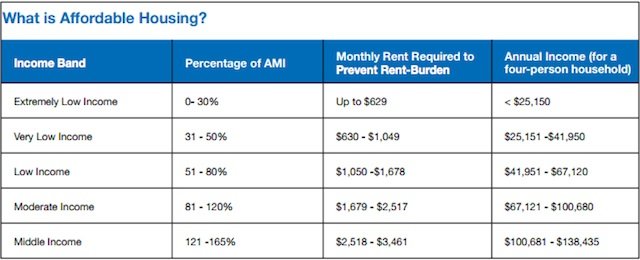
Walentas runs Two Trees, the company building 2,300 rental units in the Domino Sugar Factory. When de Blasio asked Walentas to make 700 of those units affordable (not actually affordable, mind you, but "affordable," given the generous parameters of "affordable housing" the city uses) instead of 660, the developer complained, then relented. The real estate lobby rejoiced: our progressive mayor was a pushover.
Stephen Ross, the head of Related Companies, one of the city's largest developers, supports a mansion tax increase too. Ross built the Time Warner Center, and scored $120 million in tax breaks from the Bloomberg administration to build Hudson Yards and Willets Point. The nonpartisan Fiscal Policy Institute called the decision to award the breaks "the height of fiscal responsibility…to provide massive taxpayer subsidies to a Manhattan luxury mall." Ross refers to Hudson Yards as "probably one of the great accomplishments…in America."
No matter. A small uptick in the mansion tax will surely be easier for the state legislature to swallow than a graduated 4% pied-à-terre tax on residential transactions over $5 million, an idea proposed by State Senator Brad Hoylman to stop foreign plutocrats from exploiting the city as a tax shelter.
According to FPI, Hoylman's proposal would net $665 million annually. Naturally, the real estate lobby, which shovels money into the pockets of Governor Cuomo and pretty much everyone else in Albany, opposes the idea, which is why this mansion tax increase is being discussed as an alternative.
“We are still developing our legislative agenda for the coming session," mayoral spokesman Wiley Norvell says. "We fully intend to work with our partners in government on a range of affordable housing priorities at the state level.”
A little revenue gets raised, the wealthy take a modest hit to neutralize a meaningful one, lawmakers look like they're fighting for the little guy—what's not to like?
UPDATE: Senator Brad Hoylman sent us this statement in reaction to a possible mansion tax increase:
"The idea of increasing the mansion tax is similar to efforts to create a more equitable tax structure on high end properties in major international cities, including London, where a similar tax was increased in the last couple of years. Both the pied-a-terre tax and the proposal to raise the mansion tax reflect the prevailing wisdom that the luxury real estate market should play a larger role in contributing to the expansion and strengthening of city services, particularly at a time when there is a scarcity of housing options affordable to the average New Yorker. Real estate in New York City is a safe and sound investment, especially for purchasers from countries like Russia, China and Brazil, which is worth a premium we should consider imposing whether through an increased mansion tax or a pied-à-terre tax."